Beds & daybeds
Rest in style – Mid-century furniture
Discover the timeless elegance of mid-century beds and daybeds, where clean lines, functional design, and natural materials create a perfect blend of form and comfort. Our curated collection features authentic pieces from the 1950s to the 1970s, crafted by iconic European and Scandinavian designers. Whether you’re looking for a teak frame bed or a minimalist daybed, each piece adds vintage charm and modernist flair to your interior. Explore our collection of original mid-century modern beds and daybeds – where design history meets contemporary living.
Vintage Mid-Century Modern Beds and Daybeds
The selection of beds and daybeds in the Futureantiques collection consists exclusively of original pieces from the 1950s–1980s, designed by leading Danish, Italian, and Scandinavian studios. Unlike contemporary mass-produced furniture, pieces from this era were crafted from solid hardwood, with frames built to last for decades. Each bed or daybed undergoes individual restoration in a Polish workshop before being listed in the store.
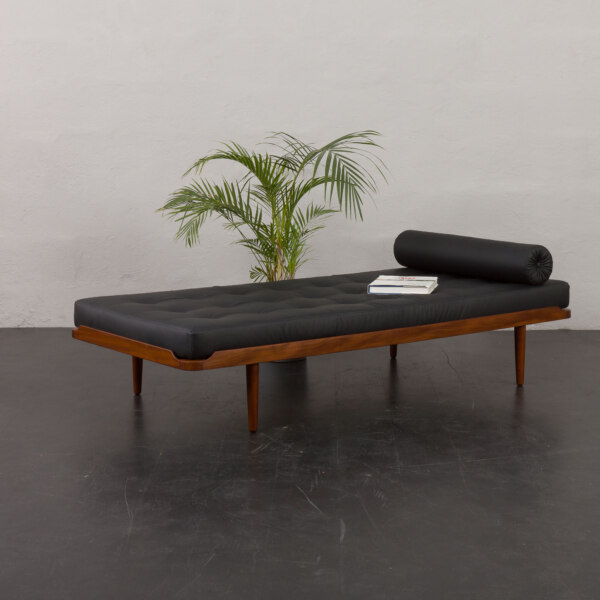
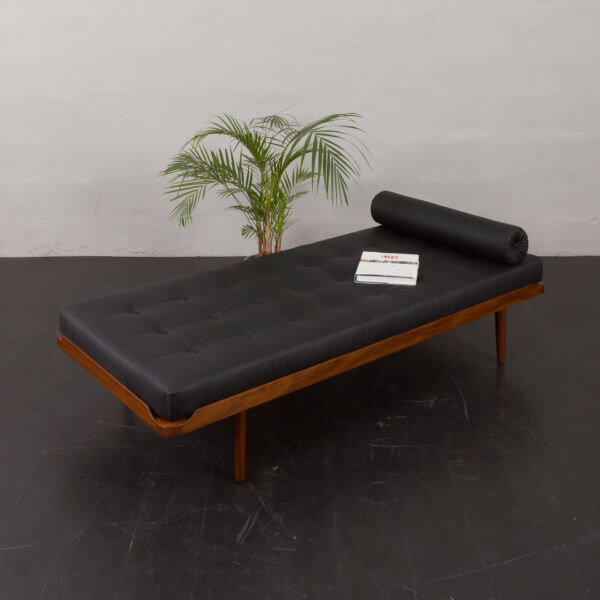
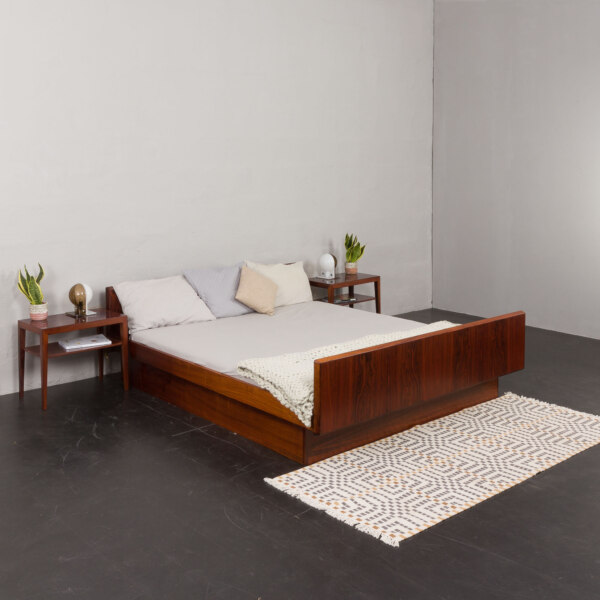
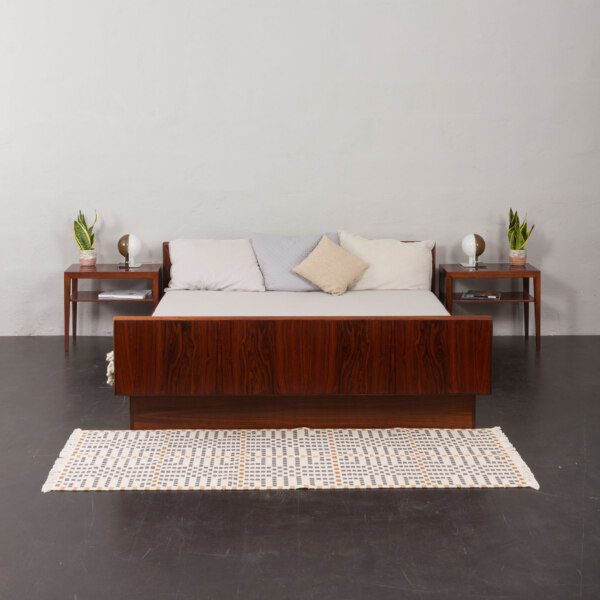
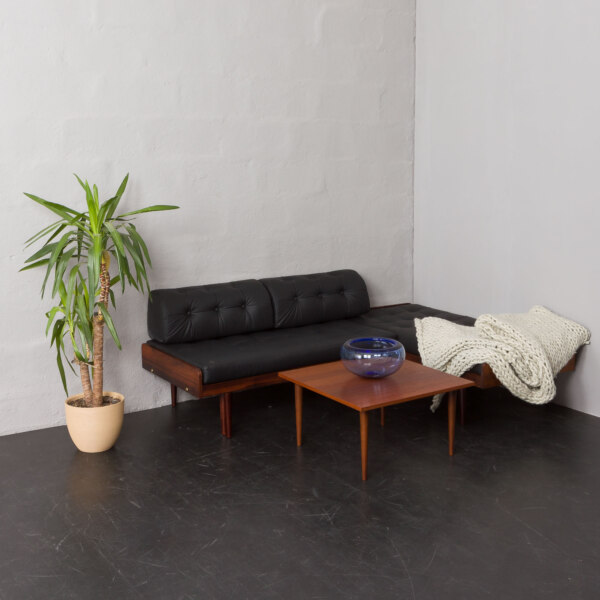
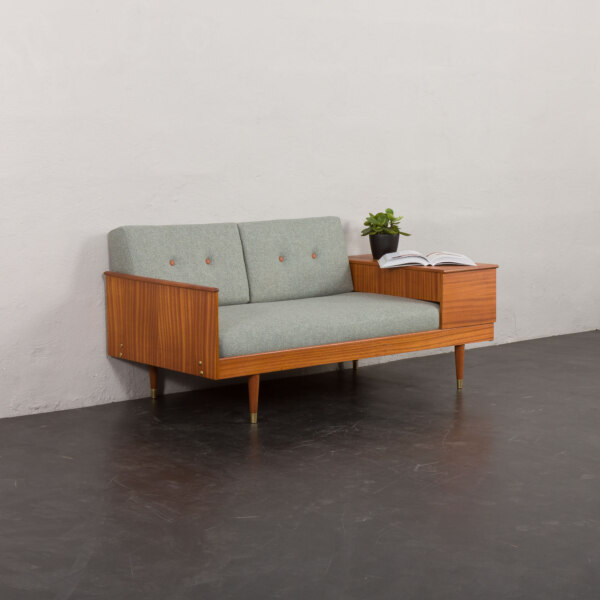
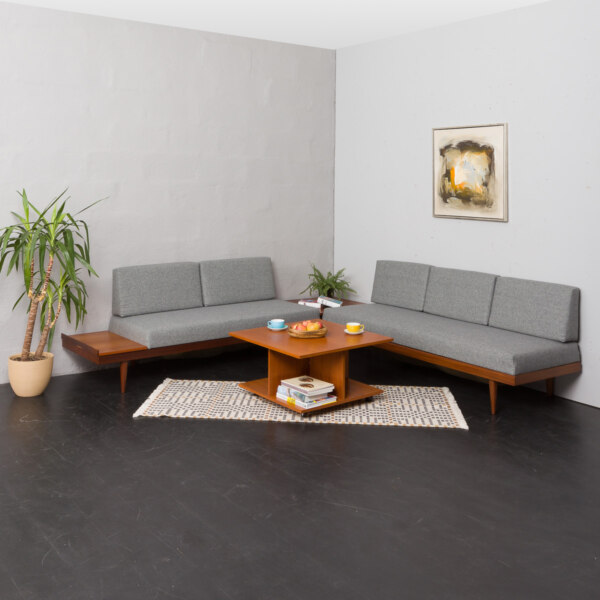
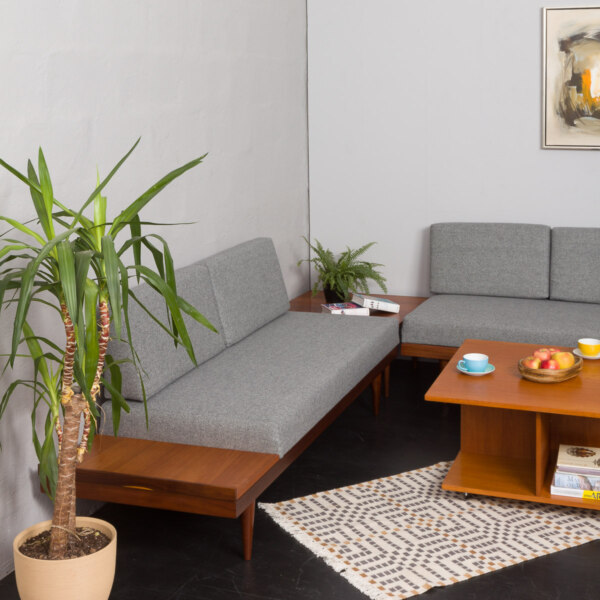
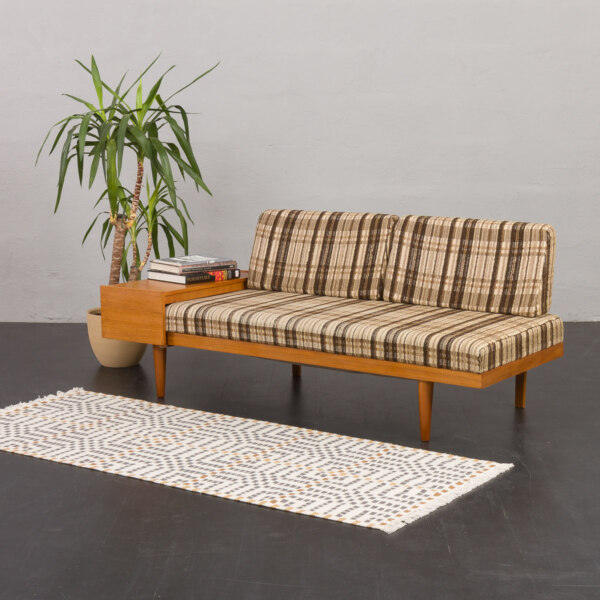
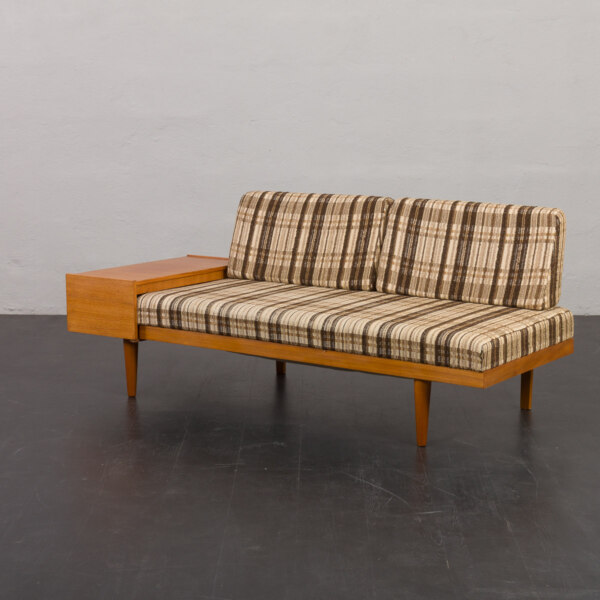
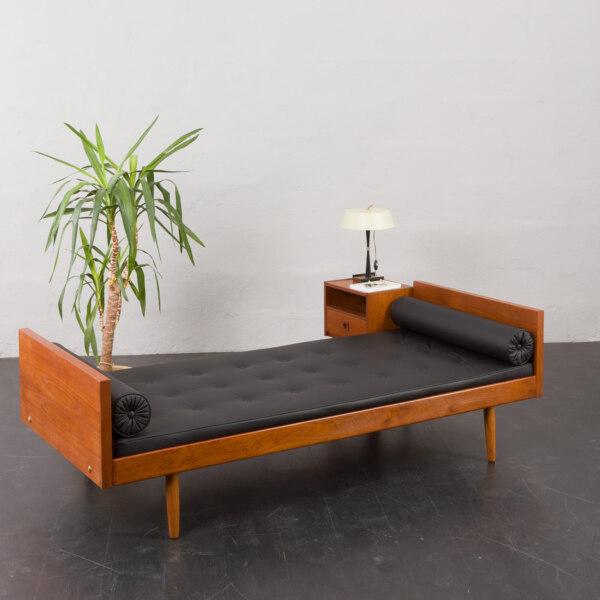
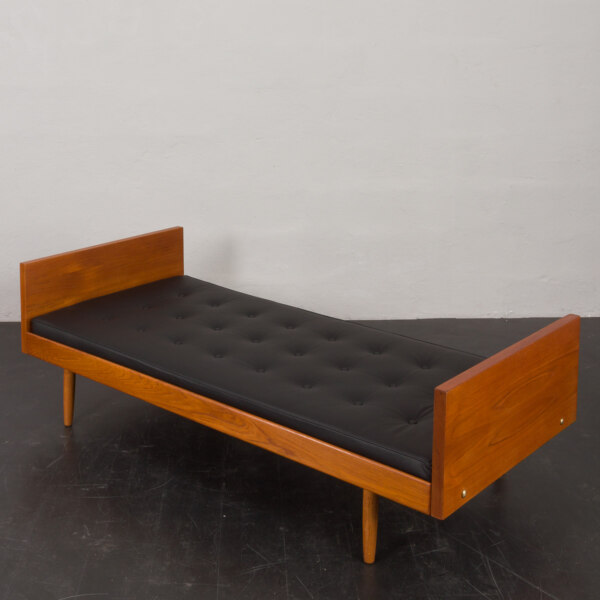
The selection includes three types of pieces. Single and double beds with frames made of teak, rosewood, or oak, often featuring integrated nightstands or headboards. Daybeds, which serve the dual purpose of daytime seating and a place to sleep, were popular in Danish interiors of the 1960s. Chaise longues and convertible sofas, including designs from Scandinavian studios with Norwegian traditions of mattress production.
What sets original mid-century beds and daybeds apart?
Bedroom furniture from the second half of the 20th century differs from contemporary reproductions in the quality of its solid wood, the precision of its joinery, and its well-thought-out functional solutions.
- Solid wood frames, most often made of teak, rosewood, or oak, joined with mortise-and-tenon joints, designed to accommodate mattresses in period-specific dimensions.
- Headboards upholstered in leather or wool; some models feature integrated spot lighting from the 1970s.
- Modular systems with integrated nightstands, such as the Morna bed designed by Afry and Tobia Scarpa for Molteni.
- Daybeds with reclining backs, a Danish design from the 1960s, serving as both seating and a place to sleep.
- Signed factory labels affixed to the frame or base, confirming the manufacturer and production period.
Designers and manufacturers represented in the MCM collection of beds and daybeds
Among the Danish designers featured in the collection is, first and foremost, Hans J. Wegner, the designer of double and single beds from the 1960s produced by Getama. Representing the Italian school are Afra and Tobia Scarpa, the designers of the Morna bed with integrated nightstands, produced by Molteni in the 1970s. From the Norwegian tradition comes Ingmar Relling, the designer of lounge sofas and chaise longues.
Manufacturers featured in the collection include Getama, Molteni, Horsens Møbelfabrik, and Norwegian workshops producing for the Scandinavian market. Factory labels and signatures confirm the authenticity of each piece of furniture and are documented in the product sheet.
Materials found in our selection of mid-century modern daybeds and beds
- Teak, predominant in Danish beds and daybeds of the 1960s, valued for its durability and warm tone.
- Rosewood, found in luxury Danish and Italian pieces; originals produced before rosewood was listed under CITES (2017 for most species, 1992 for Dalbergia nigra) may be legally traded within the European Union as pre-Convention items.
- Oak, common in Scandinavian furniture production of the 1960s and 1970s.
- Aniline leather, used as upholstery for headboards and daybeds, including the distinctive black Danish leather.
- Combed wool and upholstery fabrics from Kvadrat and Gabriel.
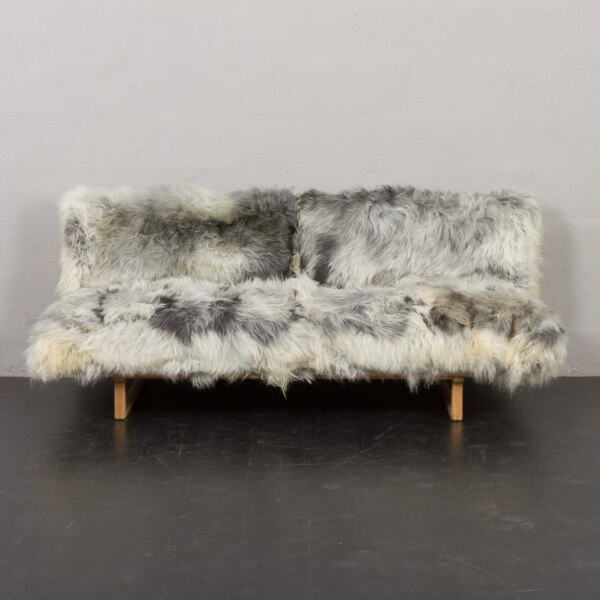
- Long-haired sheepskin, found on some Scandinavian daybeds.
Condition and restoration of vintage beds and daybeds
Every piece of furniture in our collection undergoes a multi-step restoration process tailored to its construction. The work includes checking the stability of the frame, reinforcing joints, filling in missing sections with the original type of wood, sanding visible surfaces, and applying archival-grade oil finishes. Upholstered headboards are inspected and, in cases of significant wear, replaced with leather or fabrics that capture the spirit of the era. For daybeds, the foam is replaced with certified layers that provide proper support, tailored to the dimensions of 1960s seating.
The priority remains the authenticity of the markings and the preservation of the wood’s original patina. Details of the restoration are described in the product sheet along with photographs of the frame, the manufacturer’s markings, and visible surfaces.
Mattress Dimensions and Adaptation to Contemporary Standards
Danish single and double beds from the 1960s were typically manufactured in dimensions similar to contemporary standards, with frames designed for 90×200 cm mattresses (single) and 140×200 cm and 160×200 cm mattresses (double). Italian Molteni beds from the 1970s are typically found in widths ranging from 140 to 160 cm. Each product page lists the exact internal dimensions of the frame and the recommended mattress size. If needed, consultations are also available to help select a mattress with the appropriate firmness and thickness.
The market value of signed originals remains stable, particularly for Wegner’s beds for Getam and the Scarps’ beds for Molteni, which are regularly listed in the auction archives of Wright, Bukowskis, and Phillips.
Our selection of mid-century modern beds and daybeds is regularly updated with new acquisitions from the European market. If you have questions about a specific model, are looking for a bed with specific dimensions, or would like to verify its provenance, please contact Futureantiques.