

Coffe & side & end tables
Timeless Elegance
Explore our curated collection of original mid-century coffee, side, and end tables from the 1950s to 1970s. Featuring clean lines, organic shapes, and natural materials like teak and walnut, these vintage pieces embody the timeless elegance and functionality of mid-century modern design. Whether you’re seeking a sculptural coffee table, a minimalist side table, or a compact end table, each item adds character and sophistication to any interior. Shop authentic mid-century tables at Futureantiques and bring a touch of design history into your home.


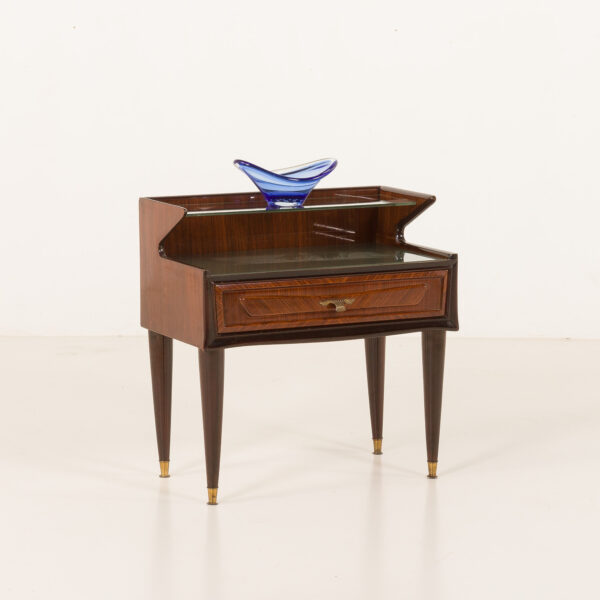
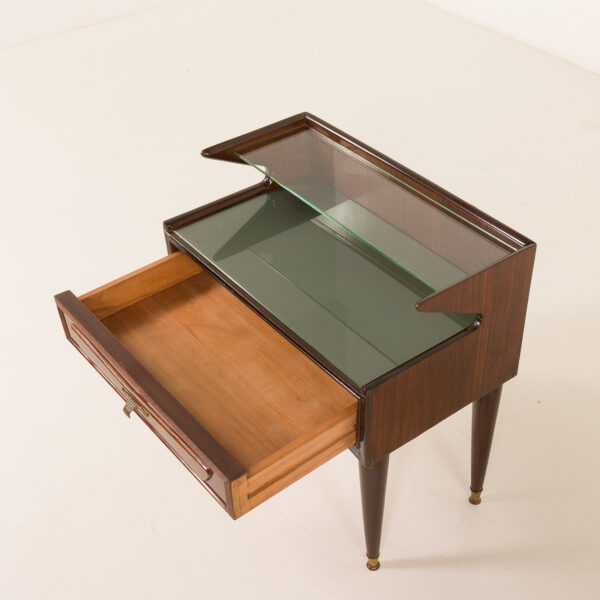
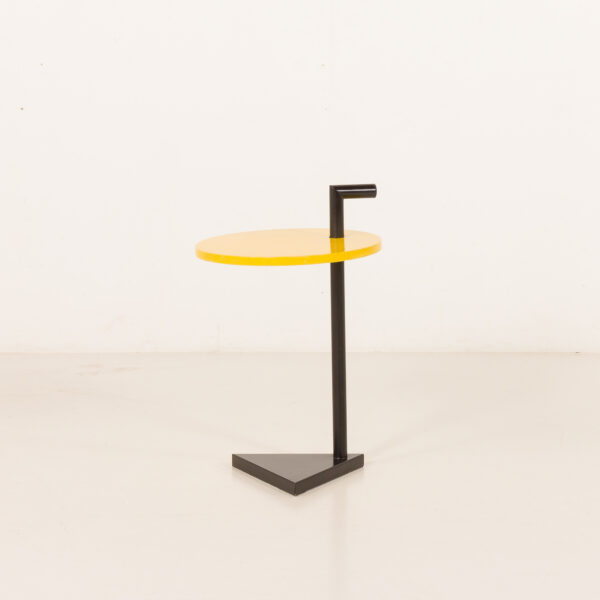
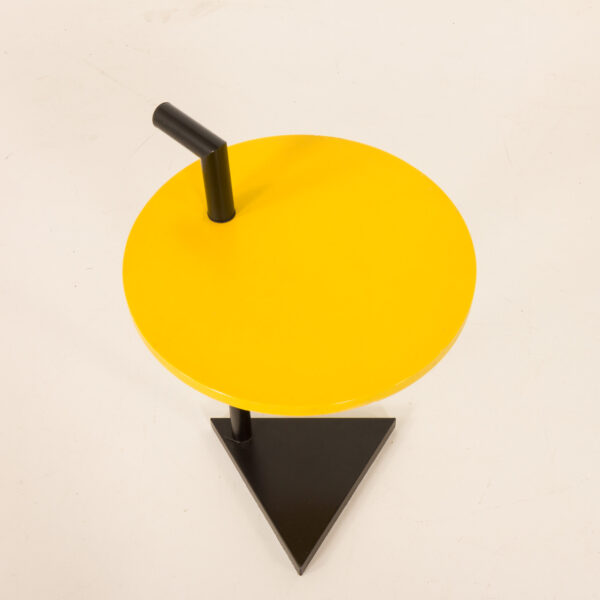




Vintage Coffee, Side, and Auxiliary Tables
The selection of coffee, side, and occasional tables in the Futureantiques collection consists exclusively of original pieces from the 1950s–1980s. These pieces particularly highlight the sculptural ambitions of mid-century designers: structural solutions that received as much attention as larger furniture, while maintaining an intimate scale. Each table undergoes individual restoration in a Polish workshop before being listed in the store.
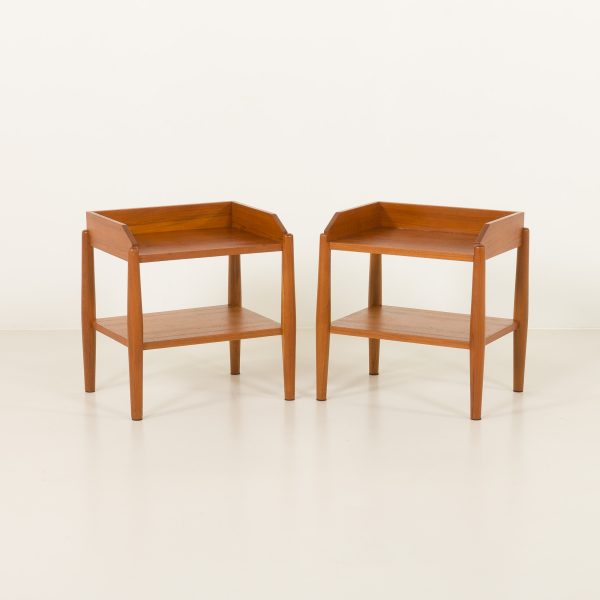
The collection features three main types of pieces. Coffee tables serve as the focal point of a lounge area, typically with a lower height and a wider tabletop. Side tables are used as complementary pieces next to armchairs or sofas. Auxiliary tables, including nesting tables and height-adjustable tables, offer flexibility for use in various areas of the home.
Features of Original Tables from the 1950s–1980s
Mid-century modern tables are distinguished from contemporary reproductions by the quality of their structural details and the precision of their joints—techniques no longer used in mass production.
- Sculptural tabletop edges with hand-rounded corners, typical of Danish workshops led by designers from the Klint school.
- Modular designs in nesting tables, where two or three tables stack one inside the other.
- Brass, chrome, and marble bases in Italian tables from the 1960s and 1970s, designed as standalone decorative sculptures.
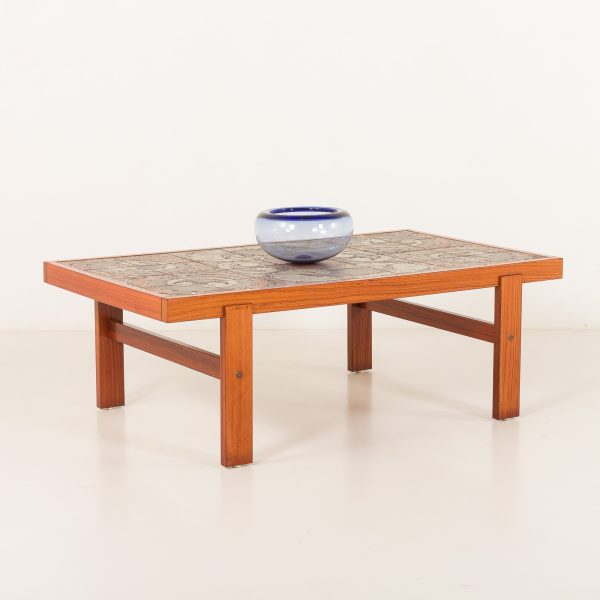
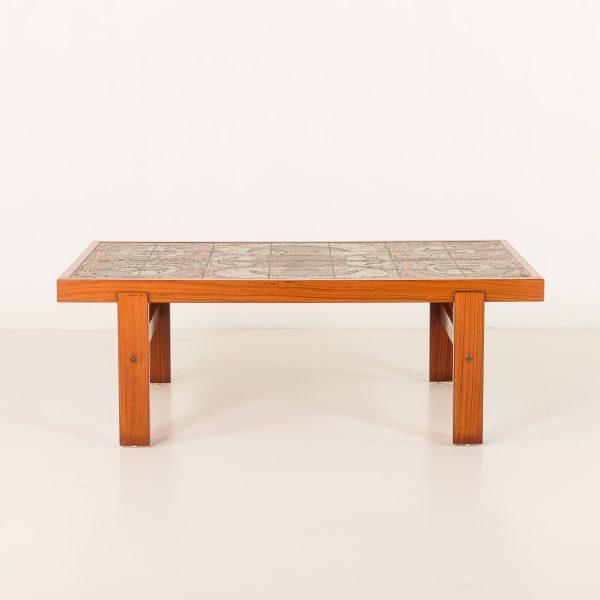
- Ceramic-inlaid tabletops, characteristic of the Danish Ox Art workshop, featuring hand-painted and signed tiles.
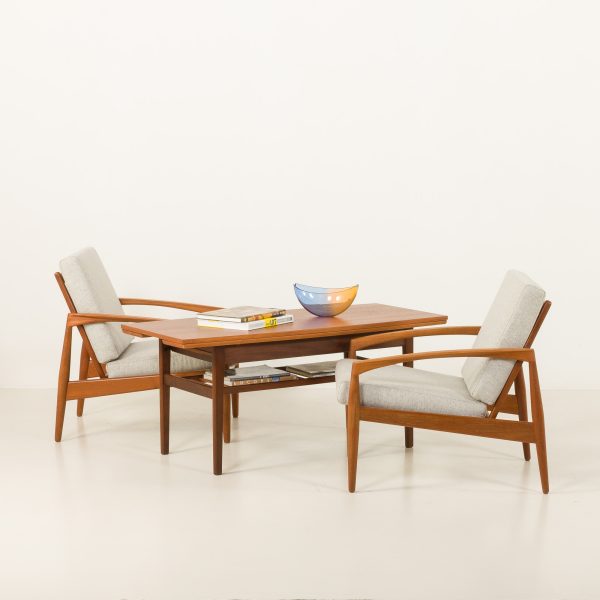
- Height adjustment and “elevator” systems, found in coffee tables that convert into dining tables, such as in Danish designs from the 1960s.
Designers and manufacturers represented in the MCM table collection
The Futureantiques table collection includes works from both the Danish and Italian design schools. Among the Danish designers are Kai Kristiansen, Johannes Andersen, Severin Hansen (who collaborated with Haslev Møbelsnedskeri), and Illum Wikkelsø. On the Italian side, the collection features works by Gio Ponti, Ico Parisi, Paolo Buffa, and Romeo Regi, the creator of the iconic tables with chrome and brass accents.
Manufacturers represented in the collection include Haslev Møbelsnedskeri, CF Christensen, Ox Art, Svend Langkilde Design, and Italian workshops working for Milanese distributors. Each table is described with the designer’s name, the manufacturer, and the production period, provided the signature allows for confirmation.
Materials Found in Mid-Century Modern Tables
Mid-century tables were crafted from the highest-quality materials, including fine woods as well as precious metal and stone elements.
- Teak, which dominated Danish tables of the 1960s.
- Rosewood, found in luxury Danish and Italian pieces; original furniture produced before rosewood was listed under CITES (2017 for most species, 1992 for Dalbergia nigra) may be legally traded within the European Union as pre-Convention items.
- Mahogany and walnut, used in earlier designs from the 1950s.
- Brass, chrome, and stainless steel, in Italian tables with sculptural bases.
- White and black marble, as well as travertine, in coffee and side tables from the Italian luxury design school.
- Ox Art ceramic tiles, hand-painted and signed by the artist.
- Tempered and smoked glass in the tabletops of Italian tables from the 1970s.
Condition and Restoration of Vintage Tables
Every table in the Futureantiques collection undergoes a restoration process tailored to the material. Wooden tabletops are sanded down, filled with veneers of the original wood species, and finished with archival oils. Metal elements are polished without removing their noble patina. Marble and travertine tops are cleaned using microfiltration, and any micro-chips are filled with mineral pastes. Ceramic tiles are left untouched unless there are chips.
Authenticity remains a priority, which is why minor signs of wear and original manufacturer’s markings are fully preserved. Details of the restoration are described in each table’s profile, along with photographs of the structural components.
How to Choose an Original MCM Coffee Table for Your Interior?
Choosing a table starts with the function it will serve in the room. A coffee table is usually placed 30–40 cm from the sofa, at seat height. A side table is chosen to match the height of an armchair or sofa’s armrest, so that it serves as a natural extension. Nesting tables work well in smaller spaces and when you need extra surface area occasionally.
Rosewood tables pair well with dark teak furniture. Marble tops balance interiors dominated by wood. Brass accents blend well with leather and wool upholstery. In the case of signed pieces, their market value increases over time, particularly for items by designers featured in auctions at Wright, Bukowskis, or Phillips.
Our selection of mid-century modern tables is regularly updated with new acquisitions from the European market. If you have questions about a specific piece, are looking for a table with particular dimensions, or need to verify provenance, please contact Futureantiques.
 English
 Polish
 French
 German