

Borge Mogensen
1914-1972
“My goal is to create objects that serve people and give them a leading role, rather than forcing them to conform to objects.”
He always carried a pencil with him. He worked in the basement of his house, listening to jazz and smoking a cigar. He tested the prototypes with the family. If they survived everyday life with his children, he approved them.
In his work, he disregarded trends and focused on the functionality, longevity, and user comfort of the designed furniture. He loved and created for people – his most important work is the so-called Folk Chair (J-39). He learned from many cultures and styles, from international modernism to Japanese sculpture.
Mogensen’s most important designs are the Folk Chair (J-39) and Family Room Furniture Set “This is Where We Live”.


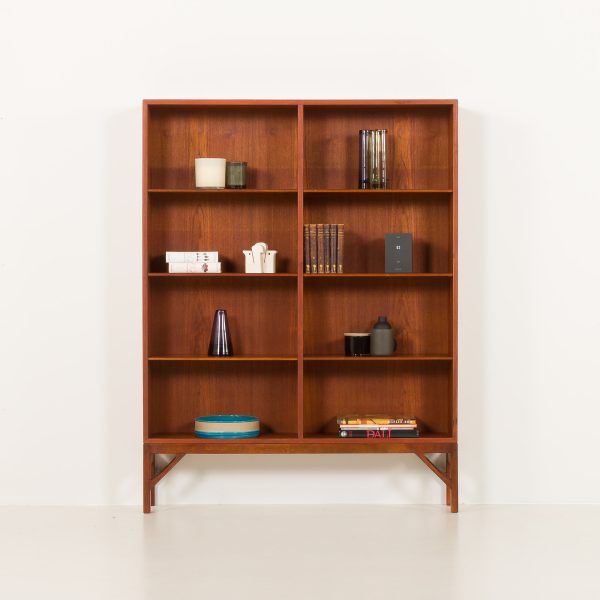


Børge Mogensen (1914-1972) belonged to a select group of designers who defined the canon of Danish modernism in the 20th century. His furniture combines the restrained functionality of Functionalism with the warmth of traditional craftsmanship, making it some of the most recognisable icons of the mid-century modern era and a constant source of interest among collectors worldwide.
A graduate of the Royal Danish Academy of Fine Arts in Copenhagen and a student of Kaare Klint, Mogensen consistently pursued the idea that furniture should serve people, not the other way around. This approach resulted in honest solid-wood constructions in which every detail has a technical or practical purpose. The Futureantiques collection presents original examples from the 1950s, 1960s and early 1970s, professionally restored to preserve the authentic wood and original joinery.
Distinctive features of Mogensen’s designs
- Solid constructions in oak, teak and rosewood
- Exposed joinery treated as an aesthetic feature rather than a flaw to be concealed
- Hand-stitched leather upholstery, often featuring visible saddle stitching
- Forms inspired by vernacular furniture, the Shaker tradition and English cabinetmaking
- Proportions derived from anthropometry and ergonomics rather than passing trends
Børge Mogensen – manufacturers and collaborations
From the early 1940s, Mogensen headed furniture design at the FDB Møbler cooperative, where he created affordable furniture for a broad audience without compromising on construction. In 1950, he established his own design studio, and in 1955 began a long-standing collaboration with Fredericia Stolefabrik, now known as Fredericia Furniture, which continued until his death. Mogensen’s designs were also produced by master cabinetmakers at Erhard Rasmussen, Søborg Møbler and P. Lauritsen & Søn. Each manufacturer applied its own finishing standards, which today help attribute individual pieces and influence their market value.
Designer profile: Børge Mogensen
Born in Aarhus, Mogensen trained as a cabinetmaker before beginning his design studies in Copenhagen. He collaborated with Hans J. Wegner early in his career and later became one of the leading figures in translating the principles of Functionalism into a Scandinavian language of warm wood. His most frequently referenced designs include the Spanish Chair (model 2226) from 1958, the J39 chair from 1947 and the Hunting Chair series. Original examples produced during the designer’s lifetime are now held in museums and private collections, while their value continues to increase as Danish design gains greater recognition on the international market.
Futureantiques offers expert guidance to collectors interested in a specific design or seeking assistance with attribution, including the history, condition and value of a piece.
Frequently asked questions
How can original Børge Mogensen furniture be identified?
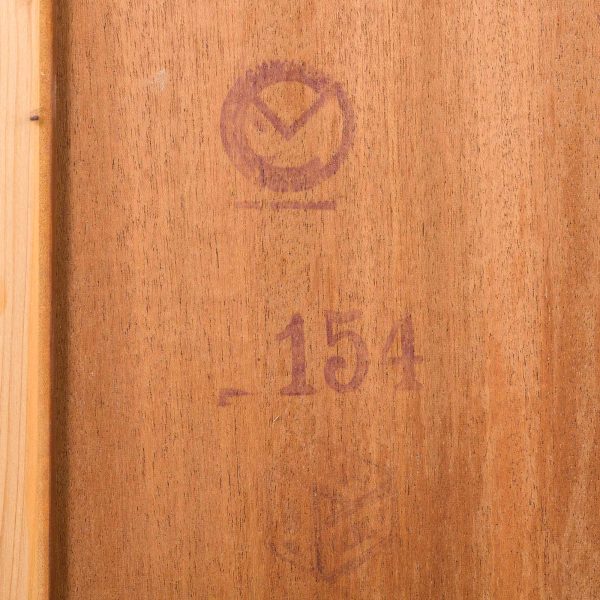
Authentic pieces can be identified by their use of high-quality solid wood, precise joinery and the manufacturer’s mark, most commonly Fredericia, FDB Møbler, Erhard Rasmussen or Søborg Møbler. Restoration by specialised conservators preserves the original structure of the furniture and enhances its value.
Which Mogensen designs are most sought after by collectors?
The most sought-after designs include the Spanish Chair (model 2226), the Hunting Chair (model 2229), the J39 chair, the Spoke-Back Sofa from 1945 and his series of storage furniture from the 1950s. Earlier examples produced during the designer’s lifetime command the highest prices.
Is the Børge Mogensen furniture offered by Futureantiques restored?
Every piece undergoes professional conservation, including the restoration of the wood, replacement of the upholstery while preserving the original aesthetic, and a thorough inspection of the construction. This work is carried out by specialists experienced in restoring period Danish furniture.
 English
 Polish
 French
 German