

Danish Desks
Danish desks with clean lines and thoughtful details. Practical workspaces designed for everyday use.




Frequently asked questions about Danish desks
What materials are most often used in Danish desks?
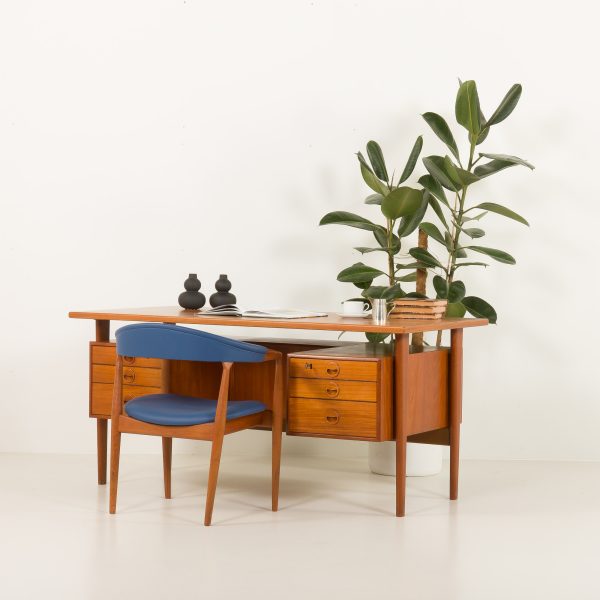
Danish desks are often made of teak, rosewood and oak, which gives them durability and natural beauty.
Who designed Danish secretary desks with hidden dressing tables?
Danish secretary desks with hidden dressing tables were designed in the 1960s by makers and designers such as Storgaard Nielsens MBF and Poul Volther.
Are Danish desks available in a vintage style?
Yes, the Danish desks offered by Futureantiques are refurbished vintage pieces that keep their original charm.
Is the range of Danish desks unique?
Yes. Futureantiques sells original vintage pieces refurbished in its own workshop, including unique Danish desks from the 1950s and 1960s.
Where can I buy vintage Danish desks?
Vintage Danish desks can be bought at Futureantiques.eu, a shop specialising in refurbished furniture from that era.
Who designed the Model 75?
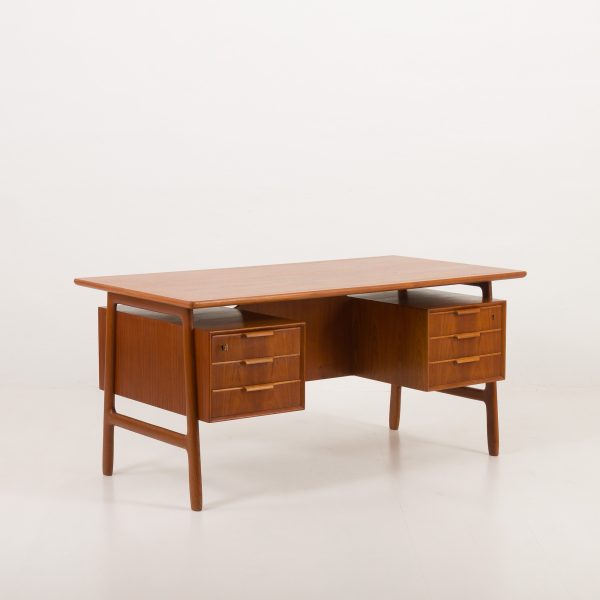
The Danish Model 75 desk was designed by Omann Jun and dates from the 1950s.
Do Danish desks have X-shaped legs?
Yes, some Danish desks, for example those in the style of Borge Mogensen, have X-shaped legs made of teak and oak.
What styles of Danish desks are available?
Various styles of Danish desks are available, including secretary desks, double-sided (partners') desks and models with hidden dressing tables.
Are Danish desks available in different colours?
The Danish desks offered by Futureantiques keep the natural tones of the wood, such as teak, rosewood and oak, without artificial staining.
 English
 Polish
 French
 German