

Chaises Cesca
Chaise Cesca de Marcel Breuer - une icône du design Bauhaus
The Cesca chair, designed by Marcel Breuer in 1928, stands as a hallmark of modernist design. Combining a sleek tubular steel frame with natural cane seating, it exemplifies the Bauhaus principles of simplicity and functionality. Originally produced by Thonet, the chair gained widespread acclaim in the 1950s under Italian manufacturer Dino Gavina, who renamed it after Breuer’s daughter, Francesca. In 1968, Knoll acquired the design, ensuring its continued production and cementing its status as a design icon. Today, the Cesca chair remains a sought-after piece, celebrated for its timeless aesthetic and enduring comfort. You can read more on our blog.
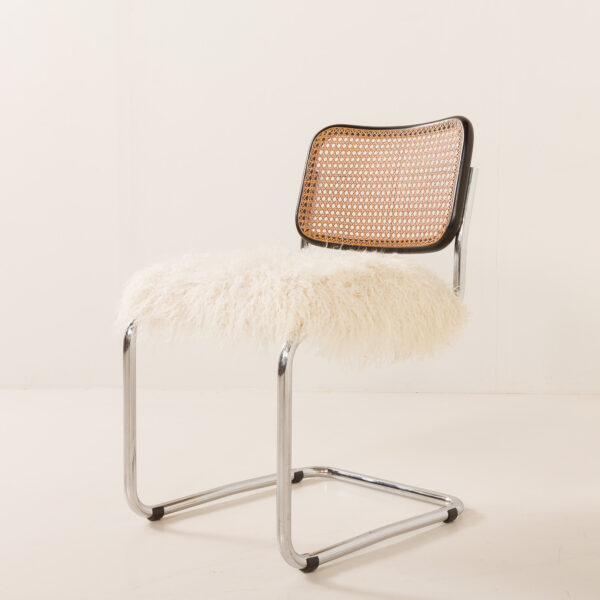
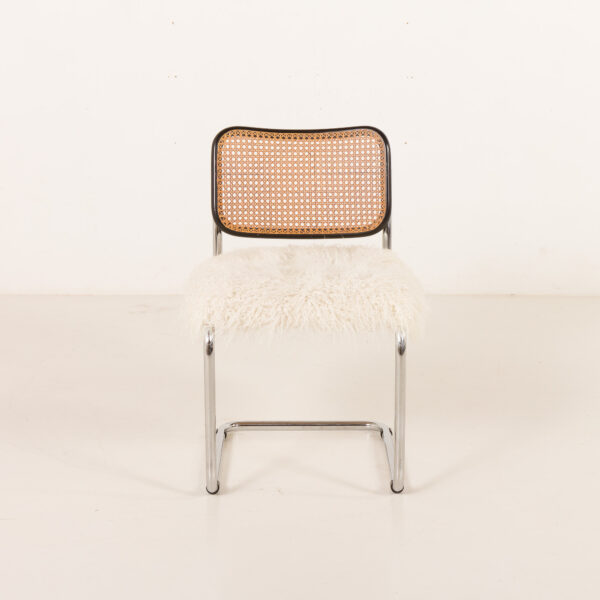
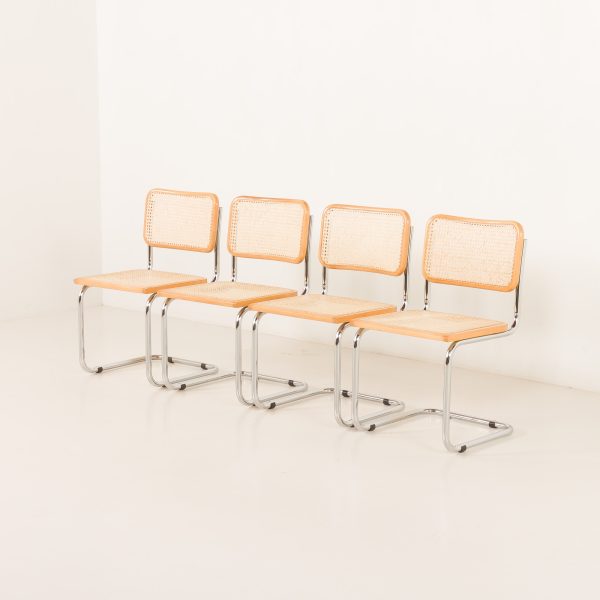
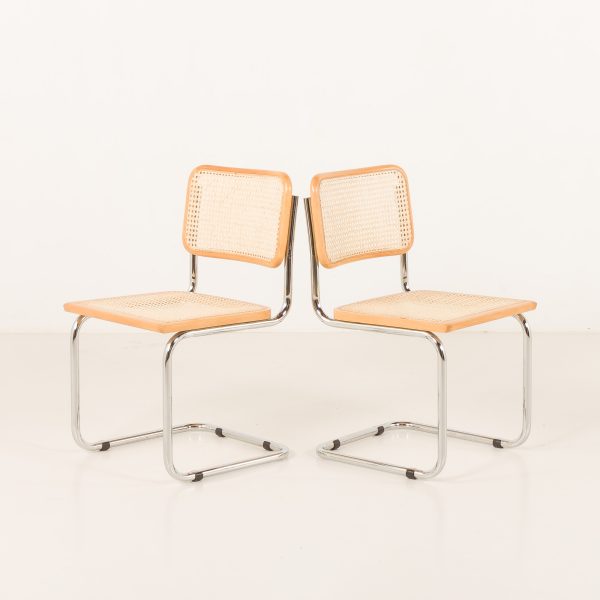


Cesca Chair
The Cesca chair is one of the most important furniture designs of the 20th century. Marcel Breuer designed the B32 model in 1928, combining a cantilevered frame made of bent chromed steel with a seat and backrest in Vienna cane. The name “Cesca” comes from the adopted daughter of Breuer – Francesca – and was given by the Italian manufacturer Dino Gavina in the early 1960s.
Our offer includes only original Cesca chairs – produced by the three official licensed manufacturers: Thonet (since the 1920s), Gavina (1960s), and Knoll (from 1968 to the present day). Each chair undergoes professional restoration in our workshop before being offered for sale.
What distinguishes an original Cesca chair?
Original pieces differ from contemporary copies in the quality of materials and craftsmanship. The frames of authentic examples are made of thicker chromed tubular steel, and the seats are made of natural rattan (Vienna cane), not synthetic substitutes. Cesca chairs by Gavina and Thonet bear the manufacturer’s markings (paper labels or stamps), while Cesca chairs by Knoll feature the company logo along with Marcel Breuer’s embossed signature.
The chair exists in two main variants: Cesca B32 (without armrests) and Cesca B64 (with armrests). Both versions share the Cesca name. The frame has a characteristic cantilever form – the chair has no rear legs, and the entire weight is supported by a single bent steel tube. This construction provides a subtle spring effect and excellent seating comfort.
Why is it worth buying an original Cesca chair?
Authentic chairs by Marcel Breuer are not only furniture but also collectible objects. The Cesca chair is part of the collection of the Museum of Modern Art in New York, and MoMA curator Cara McCarty included it among the ten most important chairs of the 20th century. Since the 1960s, millions of copies have been made, while original Gavina examples are estimated to number only several tens of thousands – making them increasingly rare on the market.
Original Cesca chairs from the 1960s and 1970s maintain stable or rising market value, as confirmed by listings on auction platforms, where set prices reach several thousand euros.
Our offer and the Cesca chair restoration process
All Cesca chairs in our offer are original pieces sourced directly from Italy – a country where this model became an integral part of everyday interiors from the 1960s onwards. Each piece undergoes careful restoration: we refresh the chromed frames, replace damaged Vienna cane elements with natural rattan, and repair the beechwood edges.
Futureantiques has been operating since 2014, and our furniture has already reached clients in over 27 countries. If you are looking for a specific Cesca variant – with armrests, in black, or in a specific quantity – contact us. We regularly source new pieces and can help you find exactly what you need.
Project history – from Bauhaus to Knoll
Marcel Breuer, a Hungarian-American architect and Bauhaus graduate, began experimenting with bent tubular steel in the mid-1920s. In 1925 he created the Wassily chair, and three years later – the B32 chair (Cesca). The first manufacturer was Thonet, but true commercial success came only after the war, when Dino Gavina began production in Italy in the early 1960s. In 1968, the American company Knoll acquired Gavina and continues Cesca production to this day.
You can find more about the chair’s history, ways to identify originals, and insights from the restoration workshop on our blog – in an article by Adam Krzemiński, founder of Futureantiques, with over 20 years of experience in vintage furniture restoration.
 English
 Polish
 French
 German